Years Later, the Words Finally Came — And Nothing Was Quite What Anyone Expected
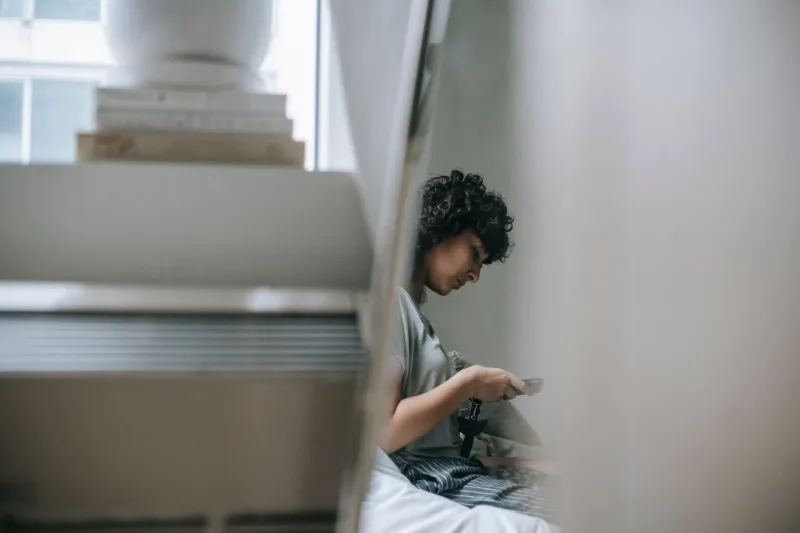
The text came on a Tuesday afternoon, completely out of nowhere.
Jamila had been eating leftover pasta at her kitchen counter when her phone lit up with a name she hadn't seen in years. Her college roommate. The one who'd borrowed money, ghosted her, and somehow managed to leave a bruise on a friendship Jamila had genuinely loved. That was 2018. This was now.
Hey. I know this is random. But I've been thinking about what happened between us for a long time, and I just — I'm really sorry. You didn't deserve any of it.
Jamila stared at it for a full minute. Then she put her phone face-down and finished her pasta.
"I didn't know what to feel," she told us. "Part of me had waited for that message for years. And then when it showed up, I just felt... tired."
Her story isn't unique. If anything, it's one of the most universally human experiences out there — the apology that arrives long after you stopped expecting it. We put out a call to Our Daily Thread readers asking about their own experiences with late apologies, whether they gave them or received them. The response was overwhelming. Hundreds of people wrote in. And what they shared was anything but simple.
The Weight We Carry Without Realizing It
There's a particular kind of low-grade ache that comes from an unresolved wrong. You don't always notice it. Life moves, time passes, you build new things. But then a song comes on, or you drive past a familiar street, and suddenly it's right there again — the thing that was never acknowledged.
Psychologists have a term for this: the "unfinished business" effect. Our brains are wired to loop back to incomplete narratives, especially ones tied to emotional pain. It's part of why we rehearse old arguments in the shower or draft imaginary confrontations with people who wronged us years ago.
For many of our readers, the late apology arrived at a moment when they'd genuinely thought they were over it.
"I had done the therapy, done the journaling, told myself I'd let it go," wrote one reader from Ohio, referring to a falling-out with her sister-in-law that had split a family gathering down the middle for three years. "Then she called me on my birthday and said she was sorry, and I cried for forty-five minutes. I didn't even know I still needed that."
Sometimes the body keeps the score even when the mind insists it's moved on.
When Sorry Heals — And When It Complicates
Not every late apology lands as relief, though. A significant number of readers described a more complicated reaction: appreciation tangled up with frustration, or a reopening of wounds they'd already worked hard to seal.
Marcus, a reader from Atlanta, received an apology from a former business partner who had essentially pushed him out of a startup they'd built together. Five years later, the ex-partner reached out saying he'd been doing a twelve-step program and was making amends. "I respected the process," Marcus said. "I did. But it also made me relive everything. I had to go back and feel all of it again — the betrayal, the financial hit, the embarrassment. And he got to feel better. I'm not sure the math worked out in my favor."
His experience points to something worth naming: sometimes a late apology is as much about the apologizer's healing as it is about the person they wronged. That doesn't make it meaningless. But it does make it complicated.
The intent behind an apology matters enormously. Is this person reaching out because they've genuinely reckoned with what they did? Or are they looking for absolution — for the other person to say it's fine, we're good — so they can close a chapter that, for the other person, may never have fully closed?
The Ones Who Reached Out — And What It Cost Them
We also heard from people on the other side of the equation. The ones who finally picked up the phone, drafted the email, or showed up at the door.
For them, the act of apologizing late came with its own particular courage — and its own brand of anxiety. What if the person didn't want to hear from them? What if they made things worse?
Denise, from Nashville, had been sitting on an apology for nearly seven years. She'd said something cruel to a close friend during a breakup, something she'd replayed in her head more times than she could count. "I kept telling myself it was too late, that bringing it up would only make her uncomfortable," she said. "I think I was also scared she'd confirm what I was afraid of — that it had actually really hurt her."
She finally sent a letter — an actual handwritten letter — last spring. Her friend called her the same day it arrived.
"She said she'd never forgotten what I said, but that she'd also never stopped caring about me," Denise told us. "We talked for two hours. It felt like finding something I didn't even know I'd lost."
Not every story ended that way. Some apologies went unacknowledged. Others were met with a polite but firm thank you, but I've moved on. One reader sent a heartfelt message to a former coworker and never heard back at all.
"I had to make peace with the fact that I did it for myself as much as for her," they wrote. "And maybe that's okay."
What Makes a Late Apology Matter
If there's a thread running through all of these stories — and there is, because there always is — it's this: the how matters as much as the that.
A late apology that centers the person wronged, that doesn't demand forgiveness, that acknowledges the specific thing that happened rather than offering a vague I'm sorry if you were hurt — that kind of apology tends to mean something. It signals that the person actually sat with what they did, turned it over, and chose to be accountable even when they didn't have to be.
A late apology that arrives with strings attached, that's really a bid for reassurance, that skips past the actual harm and goes straight to so are we good? — that one tends to land differently.
Jamila eventually wrote back to her college roommate. It took her three days and four drafts.
"I thanked her," she said. "I told her it meant something. I didn't say we were fine, because we're not exactly fine — we're strangers now, really. But I also didn't want to dismiss what it took her to send that message."
They haven't spoken since. But Jamila says something shifted.
"It's like a window I'd left cracked for years finally got closed," she said. "Not slammed. Just... closed. Gently."
Sometimes that's what a late apology does. It doesn't rewrite history or restore what was lost. It just lets both people finally, quietly, put it down.
Have you ever sent — or received — a late apology? We'd love to hear your story. Drop us a note at [email protected] or share in the comments below.