She Knocked on Her Neighbor's Door to Return a Package — What Happened Next Transformed Her Entire Block
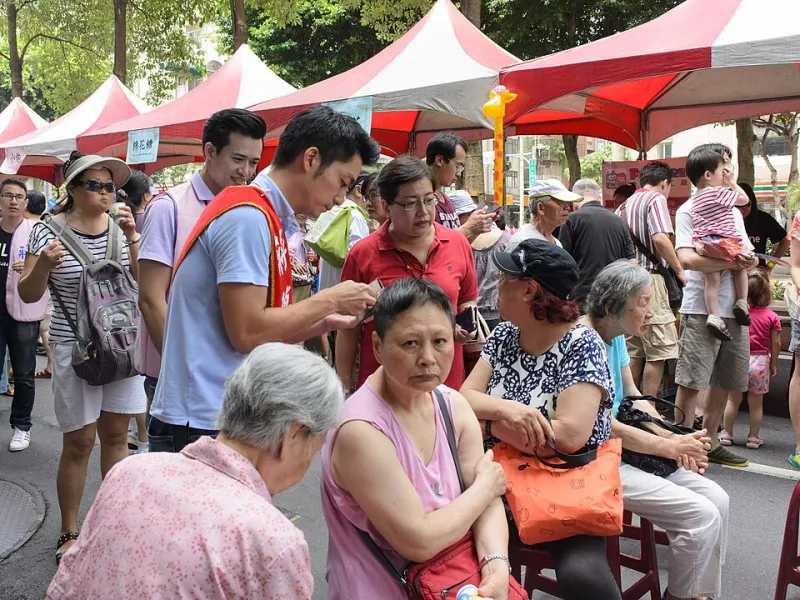
Photo: 玄史生, CC0, via Wikimedia Commons
Denise Mallory had lived on the same street in Columbus, Ohio for six years without knowing the woman three houses down. Not her name. Not her face. Nothing. That all changed on a Tuesday afternoon in October when the mail carrier left a box on Denise's porch that clearly belonged to someone else.
"I almost just left it," she admits with a laugh. "I almost put it inside my door and figured she'd figure it out eventually. But something made me walk it over."
That something — that tiny nudge — turned into a two-hour conversation on a stranger's porch. It turned into a weekly coffee ritual. And eventually, it turned into a neighborhood mutual aid network that now supports over 40 households with everything from grocery runs to childcare swaps to emergency cash loans.
Denise's story isn't unique. Across the United States, people are waking up to the quiet power sitting just beyond their front doors.
The Loneliness Hiding in Plain Sight
America has a neighbor problem. Not the noisy, feuding kind — the invisible kind. A 2023 survey from the Survey Center on American Life found that nearly half of Americans report having no meaningful relationship with any of their neighbors. We live feet apart from people whose names we'll never know, separated by garage doors, earbuds, and the gravitational pull of our own screens.
And yet, research consistently shows that strong neighborhood ties are among the most reliable predictors of individual well-being, physical safety, and even longevity. Dr. Julianne Holt-Lunstad, a psychology professor whose work on social isolation has been cited by the U.S. Surgeon General, has described the health risks of loneliness as comparable to smoking 15 cigarettes a day.
We are, quite literally, living next to medicine we're not taking.
'I Didn't Even Know Her Name'
Marcus Webb, 34, grew up in a row house in Baltimore where neighbors shared everything — food, tools, babysitting duties, gossip. When he moved to a suburb outside of Nashville for work in 2019, the contrast hit him hard.
"I'd wave at people from my car. That was it. That was the relationship," he says. "I remember thinking, if something happened to me in this house, how long before anyone noticed?"
The turning point came during a bad winter storm in 2022 when the power went out for three days. With no heat and a toddler at home, Marcus finally knocked on his neighbor Carl's door — not to make friends, but out of pure necessity.
Carl, a retired electrician in his late 60s, had a generator. He also had a guest room, a sense of humor, and apparently, a standing invitation he'd been waiting years to extend.
"He said, 'I've been hoping someone would knock on this door for four years,'" Marcus recalls. "Four years. We'd been neighbors for four years and neither of us made a move."
The two families spent those three days together. By the time the lights came back on, they had exchanged numbers, shared a meal, and made plans to get other people on the street together. Within six months, their cul-de-sac had a group chat, a shared tool shed, and a rotating meal train for new parents and folks recovering from illness.
Why It's Harder Now — And Why That Makes It More Important
There are real structural reasons neighbor relationships have eroded. Longer commutes eat into the casual outdoor time that used to generate organic interaction. Remote work, while keeping people home, often keeps them indoors and heads-down. The design of newer American suburbs — wide lots, attached garages, no sidewalks — physically discourages the kind of accidental encounters that used to build community naturally.
Social media promised connection and delivered comparison. Nextdoor, the neighborhood app, is more likely to host complaints about parking than genuine offers of help.
"The tools we built to connect us kind of missed the point," says community organizer Priya Nair, who runs a nonprofit in Phoenix called Front Porch Collective, which trains residents to rebuild hyperlocal networks from scratch. "You can't algorithmically recreate the feeling of someone bringing you soup when you're sick. That requires a human being making a choice."
Priya's organization has facilitated neighbor introductions in over 30 Phoenix-area neighborhoods since 2021. The method is almost embarrassingly low-tech: printed flyers, block walks, and hosted gatherings in front yards. The results, she says, have been profound.
"We've had people find out their neighbor is a nurse — and that neighbor has quietly become the person the whole block calls when someone has a health scare. We've had retired teachers start tutoring kids for free. We had one block where three families were all quietly struggling financially, and once they knew each other, they started pooling grocery orders and saving hundreds of dollars a month."
The Thread That Holds
Back in Columbus, Denise Mallory's neighbor turned out to be a woman named Gloria, a 58-year-old school librarian who had moved to the street after a divorce and spent two years feeling completely invisible.
"She told me she used to watch people drive by and wonder if anyone would even notice if she just... wasn't there one day," Denise says quietly. "That broke my heart. We were right there."
The mutual aid network they eventually built together — which they call The Thread, a name that feels almost poetic in retrospect — doesn't run on any app. It's a group text, a shared Google doc of who needs what and who can offer what, and a standing open-door policy that started with two women and a misdelivered box.
Gloria now coordinates the network's grocery assistance program. Denise handles the childcare swap list. There are 43 households involved. They've helped cover an emergency car repair, organized a fundraiser for a neighbor who lost her job, and quietly stocked the fridge of an elderly man on the corner who everyone now checks in on weekly.
"It sounds like a lot," Denise says. "But it really isn't. It's just people. It's just paying attention to who's around you."
How to Start Your Own Thread
You don't need a nonprofit or a strategy. You need a reason to knock. Here are a few things that have worked for real people:
- Return something. A package, a ball that rolled into your yard, a piece of mail. It's a built-in icebreaker.
- Offer something small. Extra tomatoes from your garden, a heads-up about street cleaning, a spare umbrella during a surprise rainstorm.
- Host something low-stakes. A front-yard cookout, a holiday cookie exchange, a "meet your neighbors" happy hour on a Saturday afternoon.
- Use what already exists. Block associations, local Facebook groups, and even Nextdoor can be starting points — just bring warmth to them.
The research is clear, the stories are real, and the need is urgent. Your neighborhood is full of people who are one conversation away from becoming part of your life.
Someone out there is hoping you'll knock.