The Day My Mom Stopped Being My Mom and Started Being Someone Else Entirely
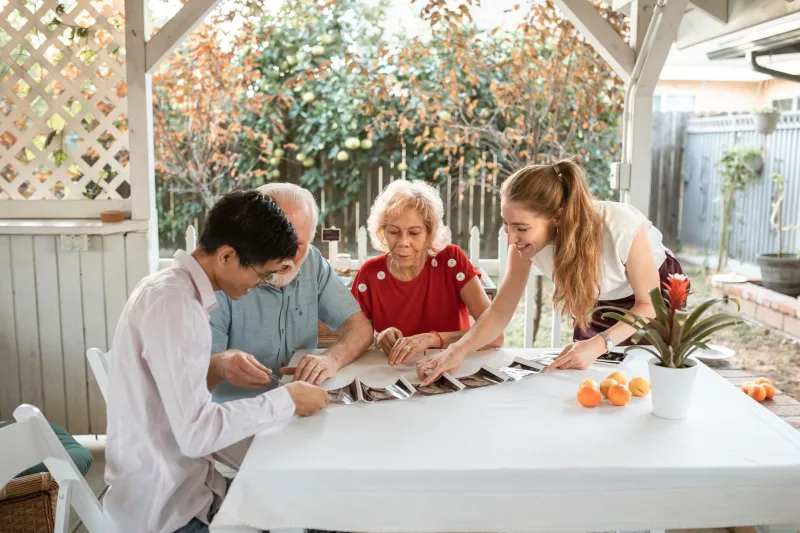
Marcus was thirty-one years old, sitting in his childhood bedroom in Memphis, helping his father sort through boxes after his mother's death, when he found the letters.
They were bundled with a rubber band, written in his mother's handwriting but addressed to someone he'd never heard of. They weren't dated. They weren't finished. They were drafts — attempts at something she'd apparently never sent. He read enough to understand that before she was his mother, before she was anyone's mother, she had been a woman in her mid-twenties who was deeply, desperately in love with someone who had moved away and taken something with him that she never fully got back.
"I sat there for a long time," Marcus told us. "And I felt something I wasn't expecting. Not upset. Not betrayed. Just — struck. Like I'd been introduced to a stranger who also happened to have raised me."
That feeling has a name, even if nobody's officially named it yet. It's the moment the parent becomes a person.
The Myth We Build Without Realizing It
When we're children, our parents are more concept than human. They are the source of food and comfort and rules. They are enormous in the way that only things we depend on completely can be enormous. We don't ask them about their twenties. We don't wonder what they were afraid of at eighteen. We don't imagine them lying awake at night wrestling with regret.
Why would we? That's not what they're for, from where we're standing.
But then something shifts. It happens at different ages, under different circumstances, and it almost always catches people off guard. Readers who responded to our callout described a specific, almost physical sensation — like a camera pulling back to reveal more of the frame than you knew was there.
"I was twenty-four and going through my first real breakup," wrote Jamie, from Portland. "I called my dad just to have someone to talk to. And somewhere in the middle of the conversation, he said, 'I know what that's like. I almost didn't marry your mother.' He said it so casually. Like I already knew. I didn't know. I had no idea. I was silent for so long he thought the call had dropped."
What We Find When We Start Looking
The revelations people described came in all shapes. Some were dramatic — affairs discovered, identities revealed, whole chapters of life that had been quietly sealed off. But many were smaller and somehow more disorienting for their smallness.
A reader named Priya from New Jersey described watching her mother, at sixty-seven, absolutely light up talking to a stranger at a farmers market about heirloom tomatoes. "She was funny. Genuinely, surprisingly funny. Charming in this way I'd never witnessed. And I thought — how many people in the world have met this version of her? This whole version? And I'm her daughter and I'm just now seeing it."
For David from Chicago, the moment came when he stumbled across his father's college yearbook and found a quote under his photo: "Most likely to disappear to Alaska and never come back." His father, the man who had worked the same accounting job for thirty-two years and taken the same two-week vacation to the same lake house every summer, had once been someone with a whole other future mapped out.
"I asked him about it," David said. "He laughed. Then he got quiet. Then he said, 'I think about it sometimes.' And that was all. But it was enough. I saw something I hadn't seen before — that his life had been a choice. And choices mean there were other options he'd closed the door on."
The Grief That Nobody Warns You About
Here's the part that surprised us: many readers described a grief that accompanied this new understanding. Not grief for anything lost, exactly. More like a mourning for the version of the story they'd been living in.
"When your parent is just your parent, the relationship has this clean shape," wrote one reader. "When they become a full person, the shape gets complicated. There's room for disappointment in a way there wasn't before. There's also more room for forgiveness."
That pairing — disappointment and forgiveness arriving together — came up again and again. Seeing a parent's humanity means seeing their limitations not as failures of parenting, but as evidence of a person doing their imperfect best with whatever they were carrying at the time.
For some readers, that reframe was quietly revolutionary.
"My mom was emotionally unavailable my whole childhood," wrote Renee from Houston. "I spent years angry about it. Then I found out, when I was in my late thirties, that she'd had a miscarriage the year before I was born. A late one. She never talked about it. Never processed it. Just kept going. And I thought — oh. She was grieving the entire time I was growing up. She wasn't withholding from me. She was just already empty."
Renee said the anger didn't disappear. But something else moved in alongside it.
When the Shift Happens Too Late
Not everyone gets the chance to meet their parent as a full person while both of them are still in the room.
Several readers described the particular ache of making this discovery after a parent had died — through journals, photographs, old friends, or the kinds of conversations that only happen when someone is no longer around to have them.
"My aunt told me things about my father at his funeral that I wish I'd known for the forty years he was alive," wrote one reader. "He'd wanted to be a painter. He'd been in love with someone before my mother. He'd been scared, genuinely scared, almost every day of his life — and I had no idea because he looked so solid from where I was standing."
There's an invitation buried in all of this, even in the late-arriving versions.
The Thread That Runs Both Ways
Something interesting happens when you start seeing your parent as a full person: you usually start wondering whether they see you the same way.
Not as their child — as a person. With your own sealed-off chapters, your own unmailed letters, your own version of a life that didn't go the way you'd once pictured.
Several readers described initiating new conversations with their parents after their own shifts — not confessional, not therapeutic, just genuinely curious. Tell me about before. Tell me about who you were. Tell me what you wanted.
"My dad cried," wrote one reader. "He said nobody had ever asked him that before. He's seventy-three years old and nobody had ever just asked him who he was before he was a father."
The thread runs in both directions, it turns out. They've been waiting to be seen, too.