My Kid Asked Me a Question I Wasn't Ready For — And I Had to Figure Out Who I Actually Am
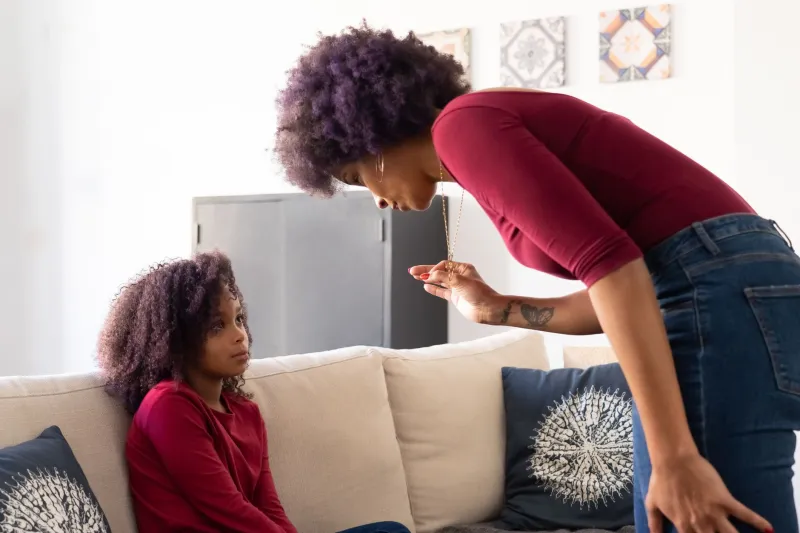
It started, as these things often do, in the car.
Marcus, a 41-year-old high school history teacher from Columbus, Ohio, was driving his nine-year-old daughter home from soccer practice when she asked, completely out of nowhere, whether he believed in God. Not in a combative way. Not even in a curious, probing way. Just like she was asking whether he wanted fries with that.
"I didn't answer her for a full minute," he says. "I kept pretending I was focused on the road. But the truth was, I genuinely didn't know what to say — because I genuinely didn't know what I believed. And I'm almost forty-two years old."
He ended up telling her that he wasn't sure. That some days he did and some days he didn't. That it was one of life's big questions, and that not having a clean answer was okay.
His daughter nodded and went back to watching the trees blur past her window. The conversation lasted maybe four minutes total. Marcus says he thought about it for four months.
The Questions That Catch Us Off Guard
Parents spend a lot of energy preparing for certain conversations. The birds and the bees talk. The drug talk. The stranger danger talk. There are books, podcasts, school programs, and well-meaning aunts who volunteer to handle the hard stuff so you don't have to.
But nobody prepares you for the question that lands sideways on a Tuesday afternoon — the one that cracks something open in you that you didn't even know was sealed shut.
For Diane, 37, a nurse in Atlanta, it was her seven-year-old son asking why Grandpa never came to visit anymore. Her father had been estranged from the family for nearly a decade after a falling-out she'd never fully processed. "I realized in that moment that I had just been carrying this massive, unresolved thing and sort of hoping my kids would never notice," she says. "And then my second-grader just... noticed."
She didn't have a tidy answer. She told him it was complicated, that sometimes adults hurt each other and don't always figure out how to fix it. Her son asked if she was sad about it. She said yes. He hugged her.
"I cried the whole time I was making dinner," she admits. "But something about saying it out loud to him — this little person who just accepted it — made it feel less like a wound I was hiding and more like just... a fact about my life."
What Kids Are Really Asking
Child psychologists will tell you that children's questions are rarely just about the surface topic. When a kid asks about death, they're often asking about safety. When they ask about fairness, they're processing their own experiences with exclusion. And when they ask their parents something deeply personal, they're frequently asking a quieter question underneath: Are you a real person? Can I trust you with the truth about me if I see the truth about you?
That reframe changes things for a lot of parents.
Jeremy, a 44-year-old contractor from Portland, Oregon, says his teenage son asked him point-blank whether he'd ever done drugs. "He wasn't asking to get ammunition. He was asking because he was at an age where his friends were starting to experiment and he wanted to know how I'd navigated it," Jeremy says. "I had to decide really fast: do I give him the sanitized version of my past, or do I actually show up for this conversation?"
He showed up. He told his son about the years he spent in his twenties making choices he wasn't proud of — not as a cautionary tale delivered from a pulpit, but as a real account from someone who had genuinely stumbled. His son listened. They talked for over an hour.
"It was the most honest conversation I'd ever had with another human being, and it was with my fifteen-year-old," Jeremy says. "Which is a little humbling, honestly."
The Parenting Myth We Need to Let Go Of
There's a version of parenthood that gets sold pretty hard in this country — the one where you have the answers, where you model confidence, where you project stability so your kids feel safe. And there's real value in that. Kids do need anchors.
But there's a version of that ideal that tips into performance. Where being a good parent means never letting your child see you uncertain, conflicted, or genuinely in-process about something.
The parents who shared their stories here describe something different — a kind of relief that came from dropping the performance, even briefly, even imperfectly. From letting their kid see the full, slightly-messy human behind the role.
Marcus put it this way: "My daughter didn't need me to have all the answers about God or life or any of it. She needed to know that I was someone who actually thought about those things. That I took them seriously. That she could bring her own questions to me someday without me just handing her a bumper sticker."
What Happens After
None of these conversations ended with a bow on top. Diane still hasn't reconciled with her father. Jeremy still worries about his son. Marcus is still not sure what he believes.
But something shifted for each of them. A thread between parent and child got a little stronger — not because the parent had the right answer, but because they were willing to sit in the question alongside their kid.
There's something quietly profound about that. These children, without any agenda or strategy, walked right up to the edges of their parents' inner lives and asked to come in. And the parents who answered honestly — haltingly, imperfectly, sometimes tearfully — say it changed something in them.
Not just as parents. As people.
Maybe that's the thing about raising kids that nobody fully warns you about. You think you're the one doing the shaping. And then your nine-year-old asks you one question on the way home from soccer practice, and you realize you've been the one getting shaped all along.