When Sorry Shows Up Twenty Years Late — And You Realize You Needed It Anyway
There's a version of an apology that arrives right on time — within the same week, while the wound is still raw and the other person is still reachable. That version, we understand. We have scripts for it. We know what to do.
Then there's the other kind.
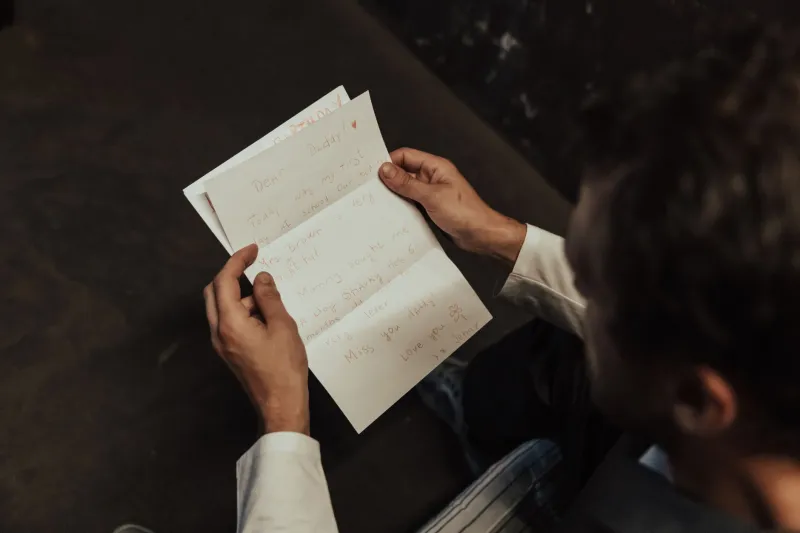
The kind that shows up in a Facebook message at 11 p.m. on a Tuesday, fourteen years after the fact. The kind that comes in the form of a handwritten letter forwarded through a mutual friend. The kind that lands in your lap when you're forty-three years old and the person apologizing is someone you haven't thought about — or maybe have thought about constantly — since high school.
That version? Nobody really prepares you for that one.
The Apology Nobody Asked For (That Changed Everything)
Marcella, a 38-year-old teacher in Nashville, got a message from her college roommate six years ago. They hadn't spoken since a falling-out during their junior year — a messy situation involving a boyfriend, a misunderstanding, and a cruelty that Marcella had quietly carried ever since.
"I had genuinely moved on," she says. "Or I thought I had. I had a whole life. And then her name popped up in my inbox and my stomach just dropped."
The message was long. Specific. Her former roommate named exactly what she had done, didn't soften it, didn't rush to justify it. She said she had been thinking about it for years and finally worked up the nerve.
"I cried for like an hour," Marcella says. "And I couldn't figure out why, because I wasn't even sad. It was more like — relief? Like something I'd been carrying without realizing it had just been set down."
She never wrote back. She didn't feel like she needed to.
Why Timing Isn't Everything
We tend to assume that an apology's value is tied to how quickly it arrives. The faster, the more sincere. The longer the delay, the more suspect the motive. But therapists and researchers who study forgiveness and interpersonal conflict suggest it's more complicated than that.
Late apologies often carry a different kind of weight precisely because of the delay. The person offering them has had years to sit with what they did. The urgency of self-protection has faded. What remains, in the best cases, is something closer to genuine reckoning.
That doesn't mean they always land well. Sometimes a late apology feels like it's more about the person giving it than the person receiving it — a way to clean a slate, ease a conscience, or wrap up a chapter that only one party needs wrapped up. The recipient, meanwhile, might have already done all the work of moving forward. Being pulled back into an old story can feel more disruptive than healing.
"I didn't want it," says Derek, 45, from Portland, Oregon, who received an apology from his estranged father two years ago after nearly a decade of no contact. "I had already made peace with who my dad was. And then he called, and suddenly I had to figure out what to do with this whole new version of him that wanted forgiveness."
Derek didn't give it — not yet, anyway. But he says the call still mattered. "It confirmed something I'd always hoped was true. That he knew. That he wasn't oblivious. That was worth something, even if I'm not ready to do anything with it."
The Apology That Changes Nothing — And Still Counts
Here's the part that surprises most people: sometimes a late apology doesn't change the relationship at all. The friendship doesn't resume. The estrangement continues. The hurt doesn't fully dissolve. And somehow, it still matters.
Jamie, a 52-year-old graphic designer in Chicago, received a letter from a former boss nearly fifteen years after a workplace incident that had derailed a significant chunk of her career. The boss had since retired. The letter was careful and genuine.
"Nothing changed," Jamie says flatly. "I didn't get my job back. I didn't get those years back. We're not friends. I don't even think about her most days." She pauses. "But I keep the letter. I don't know why. I just do."
That instinct — to keep the letter, to save the message, to hold onto the thing even when you can't explain why — says something about what late apologies actually offer. They're not always about reconciliation. They're often about acknowledgment. The simple, profound act of someone saying: I know what I did. It was real. You weren't imagining it.
For people who were gaslit, dismissed, or made to feel like they were overreacting, that acknowledgment can be more powerful than any apology that came earlier might have been.
What We Do With Them
There's no universal playbook for receiving a late apology. Some people respond. Some don't. Some find that a single exchange reopens a relationship that's been dormant for years. Others find that closure, for them, looks like reading the message, setting the phone down, and going to sleep without replying — and feeling fine about it in the morning.
What seems consistent, across the stories people share, is that the value of a late apology is almost never about what happens next. It's about what the apology names. The specificity matters. The willingness to be uncomfortable matters. The absence of conditions matters.
"She didn't ask me to forgive her," Marcella says of her former roommate's message. "She just said what she did and said she was sorry. That was it. And somehow that was the whole thing."
The Thread That Connects Us, Even Across Years
There's something quietly human about the fact that people carry their regrets for decades — that a wrong done in 2003 can still be alive enough in someone's chest in 2024 that they finally sit down and write the email. It speaks to how deeply our connections to each other matter, even the ones that ended badly, even the ones we'd rather forget.
And there's something equally human in the receiving of it — in the way the body responds before the mind has time to decide what to think. The stomach drop. The unexpected tears. The strange, unearned sense of being seen.
Late apologies shouldn't work. They arrive after all the hard parts are done. They can't undo anything. They don't always lead anywhere.
And yet. Somehow, for a lot of people, they do exactly enough.
If you've been sitting on an apology you haven't sent — or if one found you recently and you're still figuring out what to do with it — you're not alone in the not-knowing. That's kind of the whole point.