I Reached Out to Someone I Hurt Years Ago — Here's What Happened When I Finally Did
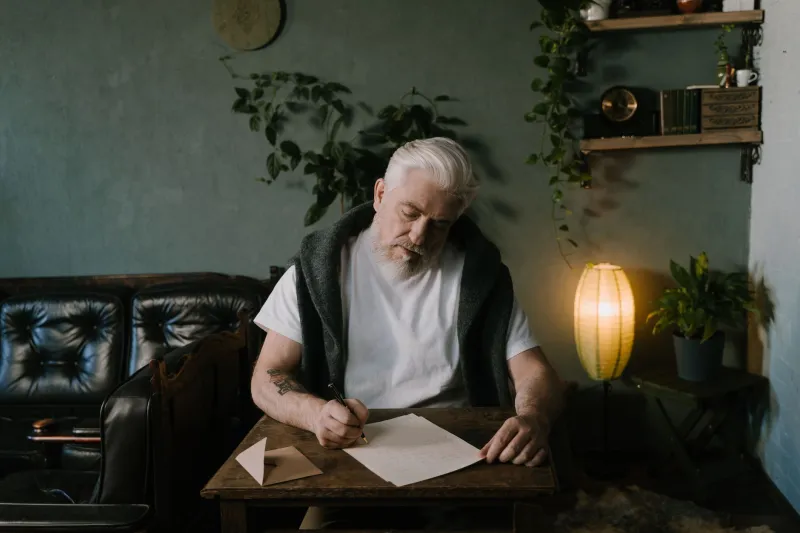
There's a particular kind of guilt that doesn't announce itself loudly. It doesn't show up as a crisis. It just lives quietly in the background — surfacing at weird moments, like when you're stuck in traffic or lying awake at 2 a.m. waiting for sleep that won't come. For Mara, a 34-year-old teacher from Columbus, Ohio, that guilt had a name. And for almost a decade, she avoided saying it out loud.
"I was 25, I was selfish, and I did something that genuinely hurt someone who trusted me," she says, keeping the specifics intentionally vague. "It wasn't dramatic. There was no big falling out. I just... made a choice that benefited me and didn't think hard enough about what it cost her."
The person she hurt — a former college friend she'll call Diane — had simply drifted out of her life after that. No confrontation. No closure. Just a slow fade that Mara spent years convincing herself was mutual.
It wasn't.
The Story We Tell Ourselves
One of the sneakiest things about guilt is how good we are at managing it. We reframe. We rationalize. We remind ourselves that everyone makes mistakes in their twenties, that the other person has probably moved on, that digging it all back up would only cause more harm than good. It's a convincing argument — and it's also, at least partly, a way of protecting ourselves from the discomfort of actually being accountable.
"I told myself I was leaving it alone for her sake," Mara admits. "But honestly? I was leaving it alone because I didn't want to feel the shame of saying it out loud. An apology isn't really for the other person when you're too scared to give it. It's just another way of making yourself feel better."
That realization — uncomfortable as it was — became the thing that eventually pushed her to act.
It happened on an ordinary Tuesday. She'd seen Diane's name pop up in the "People You May Know" section of a social media app, the algorithmic ghost of a friendship she'd let go to waste. Instead of scrolling past the way she had a dozen times before, she stopped. She clicked on the profile. She looked at the photos of a person she used to know well — someone who had apparently built a whole, full life without her — and she felt something crack open.
"I just thought: she deserves to hear it. Even if she doesn't want it. Even if she tells me to go to hell."
Writing the Message
Anyone who's ever tried to write a genuine apology knows how hard it is to get the words right. Too brief and it feels dismissive. Too long and it starts to feel like you're centering yourself again — turning the other person's pain into your therapy session. Mara says she drafted the message four times over three days before she landed on something that felt honest without being performative.
"I kept wanting to explain myself, to give context, to make her understand why I did what I did," she says. "But explanations can start to sound like excuses really fast. At some point I just had to say: here's what I did, here's that I know it was wrong, here's that I'm sorry. And then stop."
She didn't ask for forgiveness directly. She didn't request a response. She just sent it — and then put her phone face-down on the kitchen counter and went for a very long walk.
What Came Back
Diane responded three days later. It wasn't warm, exactly. But it wasn't cruel either.
The message was short — a few sentences acknowledging that she'd received the apology, that it had brought up a lot of feelings she'd worked hard to process, and that she appreciated Mara reaching out even if she wasn't sure what to do with it. There was no invitation to reconnect. There was no declaration of forgiveness. There was just... acknowledgment.
"I cried," Mara says. "Not because it gave me what I wanted. But because she responded at all. She didn't have to. She owed me nothing."
The two haven't spoken since. There's no heartwarming reunion, no rekindled friendship to tie a bow on this story. And Mara says she's made a kind of peace with that.
The Part Nobody Talks About
When we imagine sending a long-overdue apology, we tend to imagine one of two outcomes: either a tearful reconciliation or a door slammed firmly in our face. What's harder to prepare for is the middle ground — the quiet, ambiguous response that doesn't resolve anything neatly but still somehow matters.
Therapists and researchers who study interpersonal conflict often note that apologies serve multiple functions. For the person giving them, a genuine apology can be a way of re-aligning with their own values — of saying I am not the person who did that thing, or at least I don't want to be anymore. For the person receiving one, the calculus is more complicated. Forgiveness, when it comes, tends to happen on its own timeline, and it doesn't always require the person who caused the harm to be present for it.
In other words: Diane's healing was never actually Mara's to give or take. And the apology, while meaningful, was never going to be a magic eraser.
"I think I finally understood that the point wasn't to feel better," Mara says. "The point was to be honest. To stop pretending that what I did was fine. Even if she never forgives me — even if she's completely moved on and barely remembers it — I needed to say: I see it. I see what I did."
If You're Sitting on Something
Mara isn't advocating that everyone go rummaging through their past, reopening old wounds in the name of closure. Some situations genuinely call for leaving well enough alone. But if you've got something quietly eating at you — a thread you never quite tied off — she has one piece of advice.
"Ask yourself who the apology is really for," she says. "If it's just to relieve your own guilt, sit with that for a while longer. But if it's genuinely about acknowledging what someone else went through because of you? That's worth saying. Even years later. Even if they don't write back."
Some threads, it turns out, don't need to be woven back together. Sometimes just acknowledging they exist is enough.