What Happened When Someone Finally Asked the Question Nobody Usually Bothers to Ask

There's a version of the question we've all learned to deflect. Someone passes you in the hallway, tosses out a quick how are you, and keeps walking before you even finish answering. It's not really a question. It's a greeting with a question mark stapled to the end.
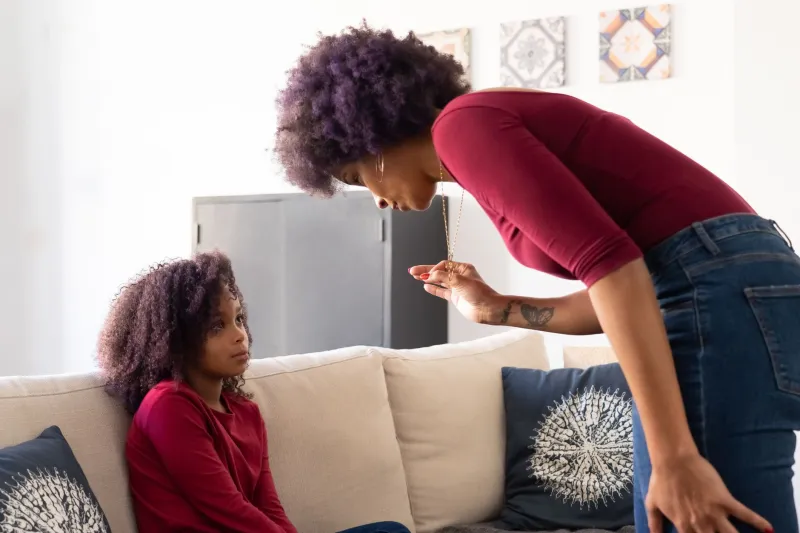
But then there's the other version. The one where someone stops. Sits down. Looks at you directly and says, are you actually okay?
That pause — that single word, actually — changes everything.
We asked Our Daily Thread readers to share their experiences with that exact moment: the one where someone asked in a way that made the usual deflection impossible, and they ended up telling the truth instead. The responses came flooding in. What they revealed wasn't just about vulnerability or mental health or friendship, though it touched all of those things. It was about what happens to a relationship — sometimes in a single conversation — when honesty finally gets a seat at the table.
The Script We've All Memorized
Before we get to the breakthroughs, it's worth sitting with why the script exists in the first place.
For most of us, I'm fine is less a lie and more a social contract. It keeps things moving. It protects us from being a burden. It's efficient. Several readers pointed out that they'd said it so many times, it had stopped feeling like a choice — it was just what came out.
"I said 'I'm doing well' to my sister every Sunday for eight months while I was quietly falling apart at work," wrote one reader from Ohio. "It wasn't that I didn't trust her. It was that I'd gotten so used to packaging myself as fine that I didn't even know how to start the other conversation."
Another reader, a teacher in her late thirties from Atlanta, described it as a kind of muscle memory. "You say it enough and your face learns to match. You almost believe it yourself."
The mask becomes the face. Until someone looks closely enough to notice the seams.
What Made the Question Land Differently
Across dozens of submissions, a pattern emerged about what separates a throwaway how are you from the kind of question that cracks something open.
The biggest factor wasn't the words themselves — it was the stillness around them.
"My friend didn't ask while we were doing something else," wrote a reader from Portland. "She put her phone face-down on the table, turned toward me, and said, 'Hey — are you actually doing okay? Because you seem like you're carrying something.' That was it. I started crying before I even answered."
Several people mentioned that the question landed hardest when it came with a specific observation attached — not just a general check-in, but evidence that the other person had been watching. You seem tired lately. You've been kind of quiet. You haven't laughed at anything in a while. That specificity communicated something powerful: I've been paying attention to you.
For a lot of people, that was the thing that finally made them feel safe enough to answer honestly. Not just being asked — but knowing they'd already been seen.
What It Actually Took to Tell the Truth
Even with the right question, the first honest answer rarely came out clean.
Readers described a familiar sensation: a pause, a quick internal negotiation, the urge to say no, really, I'm good — followed by something unexpected giving way.
"I think I said 'yeah, I'm fine' first," admitted one reader from Chicago. "And then I just... sat there. And she waited. She didn't fill the silence. And then I heard myself say, 'Actually, no. I'm really not.'"
That waiting — that willingness to let silence exist without rushing in to smooth it over — came up again and again as the thing that made the difference. The people who got honest answers weren't the ones who peppered their friends with follow-up questions or launched into advice. They were the ones who asked once, and then held space for whatever came next.
"She didn't try to fix it," wrote a reader from Nashville about her coworker, who'd noticed she'd been crying in the parking lot before work. "She just said, 'You don't have to pretend with me.' And I think that's the only reason I talked."
What Changed After
Some of the most striking submissions weren't about dramatic revelations or crises averted — they were about the quieter shift that happened in the relationship afterward.
People described a kind of recalibration. Once they'd told the truth once, the relationship seemed to reorganize itself around a new baseline. The performance of fine became harder to maintain, and in many cases, people found they didn't want to maintain it anymore.
"After I told my mom what was actually going on with me — the anxiety, the stuff at home — she didn't make it weird," one reader wrote. "She just listened. And now when she asks how I'm doing, I actually tell her. It's like we unlocked a different kind of relationship that had been sitting there the whole time."
Others described a more complicated aftermath. A few readers were honest with someone and didn't get the response they'd hoped for — the other person got uncomfortable, changed the subject, or pivoted to their own problems. That stung. But even those readers said something had shifted inside themselves, regardless of how the other person handled it. They'd practiced telling the truth. And that practice mattered.
The Person Who Asks
It's easy to focus on the person who finally opens up. But the readers who submitted their stories were just as interested in the person on the other side — the one who asked the right way.
Several people said that being asked are you actually okay in that deliberate, unhurried way made them want to become that kind of person for someone else. To notice. To slow down. To put the phone face-down and wait.
"I think about it now when I'm with people I care about," one reader from Minneapolis wrote. "Like, am I actually asking? Or am I just making noise while I walk past?"
That might be the most practical takeaway buried in all these stories. It's not just about being willing to answer honestly when someone asks — it's about being the kind of person who asks in a way that makes honesty feel possible.
The question isn't hard. The slowing down is.
One Thread, Pulled
What all of these stories share is the sense that one honest exchange — sometimes just a few minutes long — became a kind of before-and-after marker in a relationship. Not because the problems got solved, but because something real finally got said out loud.
We carry a lot in silence. Not because we want to, but because nobody's made it feel safe to set it down. And sometimes all it takes is one person who stops, looks at you, and actually wants to know.
If you've had a moment like this — on either side of the question — we'd love to hear it. Drop your story in the comments or send it our way. This thread is just getting started.